Last Tuesday we started with a WARMING UP ACTIVITY, as funny as usual.
Everybody sat in a circle. Tim started a short dialogue with the person on the right:
Tim: This is a pen
A: A what?
Tim: A pen.
A. Aaaaaah a pen!
Then, again Tim, A and B practised the same dialogue but the answers had to go back to Tim.
Tim: This is a pen.
A: A what?
B: A what?
A: A what?
Tim: A pen
A: A pen.
B. A pen
A: A pen
Tim : Aaaaah a pen!
A: Aaaaah a pen
B: Aaaaah a pen
A: Aaaaah a pen
Thus, the dialogue moved forward and backward so that everybody took part in it.
The game complicated a bit more as a second dialogue (similar to the first but instead of saying a pen we said ´a cup´) moved around from the left to the right. Everybody had to pay attention as you had to answer the person on your right and the person on your left. The funniest part of this game was for people sitting in the middle as they had to move their head from the right to the left very quickly, trying to answer as fast as possible. (Do you remember Pilar?)
After this ´stressing´ activity we practised a LISTENING ACTIVITY. It was a useful activity that we can prepare on our own. It consists of a text with some mistakes. We read it aloud and the students have to say ´STOP´ when they find a mistake
After that, Tim gave us a long list of IDEAS FOR SPEAKING ACTIVITIES:
1. Twenty questions. It has several variations:
· Animal, vegetable or mineral /· Famous people /· Jobs / Countries /· Famous person or job stuck on the back of each student
One student thinks of an object, job, famous people, etc. The rest have to make up to twenty questions. The answers can only be ´yes´ or ´no´. 2. Alibi game. First set the scene: a murder took place last night (give details). Explain that the police are going to cross-question three suspects. Divide them into three groups of policemen (3 in each) and three suspects. Then the suspects sit together and prepare the alibi while police prepare questions to ask them. Very important that both the alibis and the questions are as detailed as possible. When they´re ready, the suspects sit down one at each group and get them to start the cross questioning. After a reasonable amount of time the suspects rotate for more questioning. Finally the police have to decide who, when, how and why commited the crime.
3. Call my bluff. Teams prepare definition for unknown words. The other teams must spot which is the true definition for each word.
4. Desert Island Survival: Pyramid discussion to decide on a number of the most important things to have with you on a desert island. Different versions: the NASA game and survival in the desert.
5. The ´kettle´ game. The word ´kettke´ (or any word or nonsense word of your choice) is substituted for another word. Students ask questions about the ´kettle´ word to find out what it stands for.
6. Balloon debate: Each student chooses a famous person. All students have to be that famous person; all are in a balloon that is gradually losing height over a shark-infested sea Only one person will survive, the rest must jump. Students have to persuade all the rest to let them be the one to stay on the balloon.
7. Yes and No game: A students sits in the hot seat and answers a barrage of questions without once saying either yes or no.
8. The lying game: On the board you have to wirte five or six sentences about yourself, some of them false, and preferably all of them a little improbable (e.g. I can speak Chinese, I can windsurf, I have been married twice and have four children). The students have to find the true and the false statements by asking as many questions as possible, and also that you are going to lie about the false ones. At the end they vote for which statements they thought were true.
9. Picture dictations: Many variations possible – they dictate a picture to their partners that you give them; they dictate a picture from their imagination, the person dictating also drawing his own picture so that they can be compared afterwards; people dictate different parts of a picture which is then assembled.
10. Password: In three groups they write a short list of whatever you stipulate (e.g adjectives, titles of songs or films, - or any vocabulary list you want to revise). Give each group a new list. They now have to define or explain to you all the items on their new list ... when you get one right they move on to the next. The first group to finish is the winner.
11. Spot the difference: two similar pictures with differences.
Finally, we talked about TASK-BASED LEARNING.
We made a brainstorming of communication objectives or purposes. Tim wrote them down on the blackboard, dividing them into three different categories:
a) Those which are TRANSACTIONAL. These includes communication objectives in which the speakers want or need to get something concrete from each other. We mentioned for instance:
· Asking for something
· Giving or getting practical information
· Persuading somebody to do something.
· Planning future arrangements
b) Those which are INTERACTIONAL. There is an exchange of information and the speakers get no concrete benefit from it. For instance:
· Giving opinions.
· Agreeing and disagreeing.
· Talking about past experiences.
· Hypothesizing.
· Gossiping.
c) However there are some communication objectives that can be included in both categories:
· Confirming messages.
· Making small talks.
· Introducing somebody.
· Thanking
· Entertaining.
· Describing.
We can see that classrooom interaction is generally artificial as almost none of the interaction is genuinely transactional or genuinely interactional. The focus is on learning language (Language-based learning). However, task-based learning is much more useful as it is based on authentic real life tasks. Learners achieve an objective which is non-linguistic. The activities are not controlled and they are much more flexible since there are many elements involved: grammar, connectors, vocabulary, registers, body language, different attitudes.
In order to check what a Task-Based Learning meant, we made an activity in groups of three.One member of the group was shown a model of a ship and she had to explain to the other two how to make a similar one. They had to draw, fold, cut and sellotape following some instructions. It was funny to see the different versions of the original ship.
by Isabel
dilluns, de febrer 27, 2006


diumenge, de febrer 26, 2006
Teatre & Institut


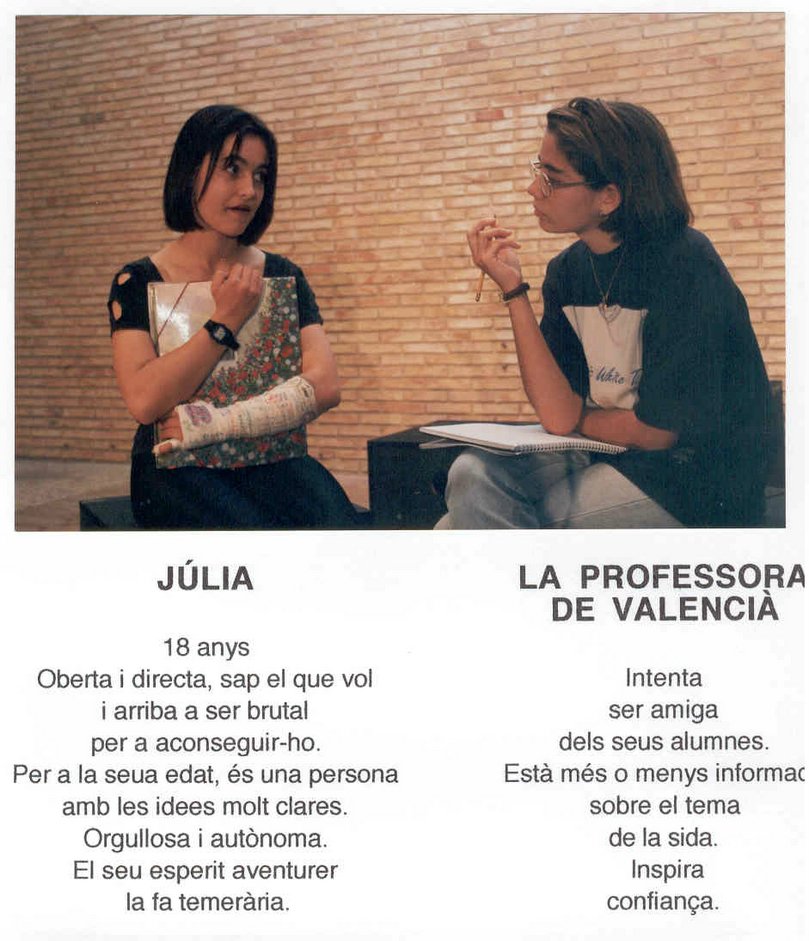
Una vegada més en el Taller "La dramatització com a eina didàctica", el professorat ens demana obres de teatre adequades per a joves. I jo, una vegada més, torne a repetir les mateixes respostes (fruit de molts anys d'investigació) i per això, a inventar-ne de noves:
- Les obres de teatre han de ser actualitzades al moment històric, contextualitzades en l'entorn sociocultural dels alumnes i adaptades als objectius de formació dels destinataris.
- Una obra de teatre és com una partitura musical que per ella mateixa no diu res, sinó que hem d'aprendre a llegir-la com llegiríem les notes d'una partitura, i a posar-la en pràctica (la necessitat de formació en art dramàtic es fa cada vegada més imperiosa).
- No és necessari que limitem la recerca d'obres a obres de teatre clàssiques, perquè per a complir la premisa núm. 1 ens serviran millor textos d'altres gèneres com la poesia o les cançons, l'adaptació d'alguna novel·la o o de còmics (més propers sempre al món dels alumnes), i per què no l'adaptació de contes o fins i tot vídeojocs.
Actualment per fortuna comptem amb eines TIC que ens permetran comunicar ràpidament tota aquesta informació i comprovar també com les obres que vaig traduir per als meus alumnes fa 10 anys continuen funcionant entre els joves d'ara.
Des d'ací un homenatge als meus alumnes del grup de Teatre Cave-Canem de l'IES Tirant lo Blanc de Torrent amb qui vaig muntar L'amor també és això que com veureu té una gran presència a la xarxa i vos pot donar informació per definir el que seria el teatre per a joves:

Voluntariat pel valencià
Els canvis socials que està experiementant la nostra societat en els últims anys, especialment amb l'arribada d'emigrants de totes les latituds, ens obliga a readaptar-nos i buscar solucions que des de la consciència de ciutadania ens permetan una millor convivència entre les noves cultures que ens visiten i la cultura d'acollida. El mestissatge en llengua s'imposarà com ha passat en altres formes de coneixement. Tal vegada caldria recordar que aquest fenomen no és nou, ni exclusiu de cap llengua com podem veure en els neologismes, els calcs sintàctics i tota mena de barbarismes que cada generació incorpora, des de fa molt de temps com podem veure per aquest llatinismes.
Des de diferents àmbits socials (Escola Valenciana; Observatori de la llengua; Diccionari Salt) estan apareguent iniciatives que busquen donar resposta i alternatives a la tradicional política d'assimilació com a única via d'integració de les cultures d'arribada.
En aquesta línia us presentem "Voluntariat pel valencià":
És el projecte de participació lingüística que té per objectiu posar en contacte voluntaris que vulguen destinar una hora a la setmana (durant un mínim de 10 setmanes) a conversar amb persones que volen llançar-se a parlar en valencià. Per llegir més...
Des de diferents àmbits socials (Escola Valenciana; Observatori de la llengua; Diccionari Salt) estan apareguent iniciatives que busquen donar resposta i alternatives a la tradicional política d'assimilació com a única via d'integració de les cultures d'arribada.
En aquesta línia us presentem "Voluntariat pel valencià":
És el projecte de participació lingüística que té per objectiu posar en contacte voluntaris que vulguen destinar una hora a la setmana (durant un mínim de 10 setmanes) a conversar amb persones que volen llançar-se a parlar en valencià. Per llegir més...
dilluns, de febrer 20, 2006
Poems & love
Since this was a very special day (Saint Valentine), the theme of our session was “love”.
As usual, we started with a warm-up activity, a very funny one: as we were sitting, we put our hands on the table, and we hit the table with one hand, one person after another. Then some changes were introduced, since we had to change the order. If one person hit the table twice, we had to go the other way round, and so, it was quite difficult to know when our turn was.
Then, Tim showed us some words using the OHP. He told us it was a whole text, but some words had been left out. We had to find out what the text was about and which the missing words were. Of course, the theme of the text was love, and he had used a poem by J. Joseph.
Having done this, we moved on to an ordering activity. Tim suggested some words and we had to stand in a line according to whether we liked that thing or we hated it. We used words like “sobrasada, dancing or reading”.
We came back to poems, and we used one by Ogden Nash. The final word of a line had been left out, and we had to find out which this word was. This was a funny poem in which the author expressed his love for someone using metaphors “I love you as much as a shipwrecked sailor hates sharks” and so on.
The following activity was quite a difficult one. Tim gave us a page with 47 empty spaces: each empty space had to be filled with a word, so that we would get a whole text in the end. He gave us some words “as a present”, and then, in teams of 3 or 4 people, we had to guess the others. We made a list of possible words, and Tim told us whether they were right or wrong. In the end, we got a poem by F. Bourdillon.
Then, we moved out to songs. The first song, “Let’s do it” by Cole Porter, was used as follows: we had some blank spaces and after hearing the song, we had to write the missing words. Then, we put the missing capital letters in the lyrics, since there were none of them
In the second song Tim got us to sing. He divided the class in two teams. The first team sang a line, and the second one repeated it as a chorus. We had a great time and, surprisingly, it didn’t rain that day!
After that, we did a “running dictation”. We worked in couples. Tim placed a text (a love poem) outside the class. One person in the team had to walk (NOT run!) outside and read the text. Then, he had to come inside and dictate what he could remember to the other member in the group. There was hard competition, and we had some laughs.
Finally, Tim told us what mini-sagas are. They are “big stories in an incredibly short space”, as he put it. We read some examples, and Tim told us to write one for the next session, which is to take place on Tuesday, 21st. The only orders that we were given were that we had to write about love and use EXACTLY 50 words, so we will see what we get.
Nydia García
As usual, we started with a warm-up activity, a very funny one: as we were sitting, we put our hands on the table, and we hit the table with one hand, one person after another. Then some changes were introduced, since we had to change the order. If one person hit the table twice, we had to go the other way round, and so, it was quite difficult to know when our turn was.
Then, Tim showed us some words using the OHP. He told us it was a whole text, but some words had been left out. We had to find out what the text was about and which the missing words were. Of course, the theme of the text was love, and he had used a poem by J. Joseph.
Having done this, we moved on to an ordering activity. Tim suggested some words and we had to stand in a line according to whether we liked that thing or we hated it. We used words like “sobrasada, dancing or reading”.
We came back to poems, and we used one by Ogden Nash. The final word of a line had been left out, and we had to find out which this word was. This was a funny poem in which the author expressed his love for someone using metaphors “I love you as much as a shipwrecked sailor hates sharks” and so on.
The following activity was quite a difficult one. Tim gave us a page with 47 empty spaces: each empty space had to be filled with a word, so that we would get a whole text in the end. He gave us some words “as a present”, and then, in teams of 3 or 4 people, we had to guess the others. We made a list of possible words, and Tim told us whether they were right or wrong. In the end, we got a poem by F. Bourdillon.
Then, we moved out to songs. The first song, “Let’s do it” by Cole Porter, was used as follows: we had some blank spaces and after hearing the song, we had to write the missing words. Then, we put the missing capital letters in the lyrics, since there were none of them
In the second song Tim got us to sing. He divided the class in two teams. The first team sang a line, and the second one repeated it as a chorus. We had a great time and, surprisingly, it didn’t rain that day!
After that, we did a “running dictation”. We worked in couples. Tim placed a text (a love poem) outside the class. One person in the team had to walk (NOT run!) outside and read the text. Then, he had to come inside and dictate what he could remember to the other member in the group. There was hard competition, and we had some laughs.
Finally, Tim told us what mini-sagas are. They are “big stories in an incredibly short space”, as he put it. We read some examples, and Tim told us to write one for the next session, which is to take place on Tuesday, 21st. The only orders that we were given were that we had to write about love and use EXACTLY 50 words, so we will see what we get.
Nydia García
Teatre de la imatge

A partir d'imatges d'escultures demanarem als alumnes que per parelles es facen fer les postures com si estigueren modelant-les. Qui es deixa modelar tindrà els ulls tancats i haurà d'endevinar el personatge que li estan adjudicant. En acabar tindrem com un museu d'escultures. A la imatge teniu a Poseidó i a l'enllaç altres imatges possibles.
Aquesta activitat pot servir per al taller de teatre o per a la classe d'història de l'art.
diumenge, de febrer 12, 2006
Ciberliteratura
Fa temps vaig descobrir un jove poeta valencià a Dénia que després es va rebelar com la meua primera incursió en la ciberliteratura: L'àmbit prohibit. Des de fa unes setmanes estem parlant entre diferents assidus dels edublocs de crear un espai on presentar material didàctic sobre el nostre poeta Vicent Andrés Estellés. Per anar preparant material anem a documentar el que existeix en la xarxa sobre l'Estellés i s'acceptem tot tipus de col·laboracions.
De moment i tenint en compte que un dels grans temes d' Estellés era la recreació del tema de l'amor amb llenguatge popular entre en l'àmbit prohibit una bona pàgina perquè els vostres alumnes envien poemes electrònics per al dia dels enamorats.
- Antologies i mutantges teatrals a Magisteri Teatre-Mag Poesia de les Illes Balears
"Ell és un dels bons poetes que han escrit la ciutat de València. Ell ha dit com ben pocs els secrets dels carrers i de les vides que s'hi amaguen".
- Propostes didàctiques a la pàgina interactiva "Viu la poesia"
- Anàlisi i referències bibliogràfiques sobre l'Estellés a la UOC "La difusió d'una veu poètica valenciana" .
- ...
Envia'ns enllaços o les teues propostes.
De moment i tenint en compte que un dels grans temes d' Estellés era la recreació del tema de l'amor amb llenguatge popular entre en l'àmbit prohibit una bona pàgina perquè els vostres alumnes envien poemes electrònics per al dia dels enamorats.
- Antologies i mutantges teatrals a Magisteri Teatre-Mag Poesia de les Illes Balears
"Ell és un dels bons poetes que han escrit la ciutat de València. Ell ha dit com ben pocs els secrets dels carrers i de les vides que s'hi amaguen".
- Propostes didàctiques a la pàgina interactiva "Viu la poesia"
- Anàlisi i referències bibliogràfiques sobre l'Estellés a la UOC "La difusió d'una veu poètica valenciana" .
- ...
Envia'ns enllaços o les teues propostes.
divendres, de febrer 10, 2006
Drama way
Rhythm, intonation, word stress… are those aspects of spoken language that the teacher of English in a Secondary School in Spain frequently forgets while he/she (after some long years of their university studies) is in his/her daily warfare to attract the attention of the students. A great loss, indeed, since the learner, whose only language he/she is in contact with is the teacher’s, will be trained in the foreign idiom speech rhythm (a stress timed language in this case) with the rhythm of the Spanish language, a syllable timed one.
Consequently, it was tempting to pay attention to these features of verbal communication through some appealing and ingenious activities, especially that one where we had to put the stress on some imaginary words, that other where we observed how a change in the stress of a sentence may modify its meaning, or that one where we realized the relativity of word stress in connected speech.
Poor students… God knows the quality of the language they receive from us, teachers…That’s why we made a firm promise: to be aware of and make students aware as much as possible of these linguistic elements such as rhythm, intonation and word stress when teaching from now on.
On the other hand, we also had the opportunity to gain knowledge of the procedure to introduce in our lessons the practice of “a controversial class debate”. Taking the example of “euthanasia” as a discussion topic, the teacher showed the graded preparation which may lead our scholars to this kind of activities. We went through an introductory-warm up general discussion first, after having been asked some questions related to concrete situations dealing with this theme and then, we performed an amusing role-play debate where a very well trained nun actress showed her ability to persuade the rest of the group.
Finally, after a very funny “sentence auction” used to point out the grammar mistakes we had made during the previous talking activity, we fixed on the next meeting for next Tuesday. See you there!!!.
P.S. Breaks are improving. The cookies and hot drink was enjoyable. Next time it is going to be a real “Tea time”.
by Adelaida Blasco
Consequently, it was tempting to pay attention to these features of verbal communication through some appealing and ingenious activities, especially that one where we had to put the stress on some imaginary words, that other where we observed how a change in the stress of a sentence may modify its meaning, or that one where we realized the relativity of word stress in connected speech.
Poor students… God knows the quality of the language they receive from us, teachers…That’s why we made a firm promise: to be aware of and make students aware as much as possible of these linguistic elements such as rhythm, intonation and word stress when teaching from now on.
On the other hand, we also had the opportunity to gain knowledge of the procedure to introduce in our lessons the practice of “a controversial class debate”. Taking the example of “euthanasia” as a discussion topic, the teacher showed the graded preparation which may lead our scholars to this kind of activities. We went through an introductory-warm up general discussion first, after having been asked some questions related to concrete situations dealing with this theme and then, we performed an amusing role-play debate where a very well trained nun actress showed her ability to persuade the rest of the group.
Finally, after a very funny “sentence auction” used to point out the grammar mistakes we had made during the previous talking activity, we fixed on the next meeting for next Tuesday. See you there!!!.
P.S. Breaks are improving. The cookies and hot drink was enjoyable. Next time it is going to be a real “Tea time”.
by Adelaida Blasco
dijous, de febrer 09, 2006
Teatre i educació en valors
Aquesta nova part del taller La dramatització com a eina didàctica l'està portant a cap Josep Lluís Gràcia, un experimentat professor en els diferents nivells educatius i en diferents matèries.
BIBLIOGRAFIA
Cómo estimular la expresión oral en clase. Recasens, Margarita.CEAC.Barcelona,1993.
Creatividad Teatral. Equipo CODA.Alhambra Longman.Madrid,1995.
Drama. Tècniques teatrals per a l’ensenyament. Vernet, Francesc i altres. La Magrana. Barcelona, 1996.
El teatre a l’escola. Sirera, Rodolf; Cubedo, Manel. Generalitat Valenciana. València, 1989.
Expresión-comunicación y lenguajes en la práctica educativa. Bassols, Mireia i altres. Recursos 46. Barcelona, 2003.
Juegos de expresión dramática. Mantovani, Alfredo; Morales, Rosa Inés. Ñaque.Ciudad Real.1999
Jugar al juego. Poulter, Christine. Ñaque. Ciudad Real, 1996.
La pedagogía puesta en escena. Laferrière, Georges. Ñaque. Ciudad Real, 1997.
Los recursos del actor en el acto didáctico. Bayón, Pilar. Ñaque.Ciudad Real, 2003.
Práctica de la expresión corporal. Aranda, Leopoldo; Motos, Tomás. Ñaque. Ciudad Real, 2001.
Prácticas de dramatización. Motos, Tomás; Tejedo, Francisco. García Verdugo. Madrid, 1996.
Taller de dramatització-teatre. Motos, Tomás; Navarro, Antoni; Palanca, Xema; Tejedo, Francisco. Bromera. Alzira, 1998.
Taller de teatro. Marcer, Àngels. Alba. Barcelona, 2004.
Teatre en l’educació. Navarro, Antoni i altres (8 autors). Bromera. Alzira, 1996.
Teatro. El arte en la enseñanza. Mascaró, Pere. Ñaque.Ciudad Real, 2001.
BIBLIOGRAFIA
Cómo estimular la expresión oral en clase. Recasens, Margarita.CEAC.Barcelona,1993.
Creatividad Teatral. Equipo CODA.Alhambra Longman.Madrid,1995.
Drama. Tècniques teatrals per a l’ensenyament. Vernet, Francesc i altres. La Magrana. Barcelona, 1996.
El teatre a l’escola. Sirera, Rodolf; Cubedo, Manel. Generalitat Valenciana. València, 1989.
Expresión-comunicación y lenguajes en la práctica educativa. Bassols, Mireia i altres. Recursos 46. Barcelona, 2003.
Juegos de expresión dramática. Mantovani, Alfredo; Morales, Rosa Inés. Ñaque.Ciudad Real.1999
Jugar al juego. Poulter, Christine. Ñaque. Ciudad Real, 1996.
La pedagogía puesta en escena. Laferrière, Georges. Ñaque. Ciudad Real, 1997.
Los recursos del actor en el acto didáctico. Bayón, Pilar. Ñaque.Ciudad Real, 2003.
Práctica de la expresión corporal. Aranda, Leopoldo; Motos, Tomás. Ñaque. Ciudad Real, 2001.
Prácticas de dramatización. Motos, Tomás; Tejedo, Francisco. García Verdugo. Madrid, 1996.
Taller de dramatització-teatre. Motos, Tomás; Navarro, Antoni; Palanca, Xema; Tejedo, Francisco. Bromera. Alzira, 1998.
Taller de teatro. Marcer, Àngels. Alba. Barcelona, 2004.
Teatre en l’educació. Navarro, Antoni i altres (8 autors). Bromera. Alzira, 1996.
Teatro. El arte en la enseñanza. Mascaró, Pere. Ñaque.Ciudad Real, 2001.
dilluns, de febrer 06, 2006
Concurs teatre escolar
Per al professorat que feu teatre amb els seus alumnes existeix des de fa uns anys una plataforma on podeu presentar les vostres obres, es tracta del Concurs de teatre cocacola que la Fundació Cocacola Espanya fa en col·laboració amb el MEC. Les últimes edicions han estat guanyades per un professor Pedro Pérez de l'IES "El bovalar" d'Alaquàs (València). Tal vegada seria interessant crear un concurs només a la nostra comunitat donat l'acceptació que tenen als nostres centres aquest tipus d'activitats.
Què en penseu?
Què en penseu?
Audiovisuals a l'aula
Estem d'enhorabona perquè el C.P. Jaume I de Puçol s'ha llançat al ciberespai per presentar a la comunitat educativa valenciana les seues experiències sobre la utilització del cinema com a eina didàctica. Des del nostre bloc els anirem recolzant amb enllaços i propostes que servisquen a tots els que pensen que educar hauria de ser entre altres coses ensenyar a veure la televisió. A continuació presentem algunes idees enllaçades:
1. L'alfabetització visual és un repte que encara està pendent a l'escola com reivindiquen alguns col·lectius com Aulamedia, Banda visual, etc.
2. El cinema és un gènere fill de la literatura i tots dos tenen com a finalitat contar i comunicar històries als altres.
3. Per a educar el gust i l'afecció a veure cinema de qualitat podem utilitzar excel·lents guies didàctiques.
1. L'alfabetització visual és un repte que encara està pendent a l'escola com reivindiquen alguns col·lectius com Aulamedia, Banda visual, etc.
2. El cinema és un gènere fill de la literatura i tots dos tenen com a finalitat contar i comunicar històries als altres.
3. Per a educar el gust i l'afecció a veure cinema de qualitat podem utilitzar excel·lents guies didàctiques.
diumenge, de febrer 05, 2006
Llum negra
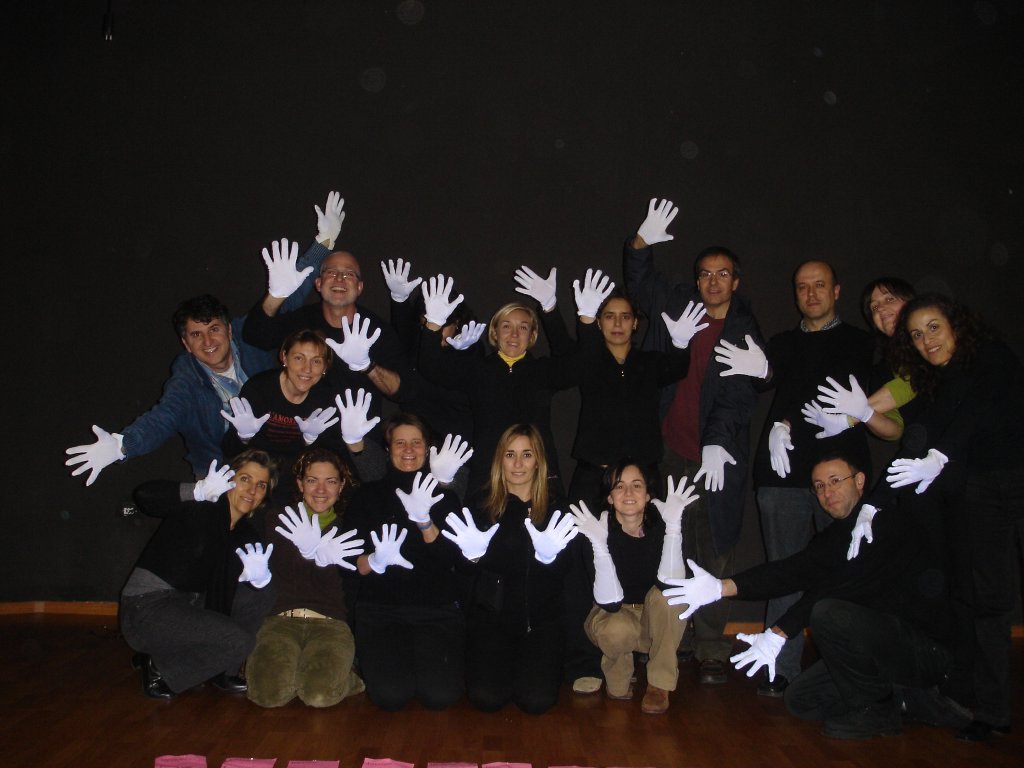
Al taller de llum negra treballàrem la cançó de "Les mans" de Raimon i va ser la cloenda d'aquestes tres sessions amb Rafa Desco. Aquest "artista pedagog" fa molts anys que investiga des de l'escola la tècnica la llum negra, inventada pel Teatre Negre de Praga i ha donat conferències a tot l'Estat sobre aquest recurs creatiu. Si voleu saber-ne més entreu ací (en castellà).
Prompte tindreu ací tota la unitat didàctica i l'explicació d'aquest recurs dramàtic molt vàlid per iniciar als vostres xiquets no sols en el món del teatre sinó en tots els llenguatges expressius (música, plàstica, expressió corporal, escenografia, etc.).
dissabte, de febrer 04, 2006
Creadors a l'aula
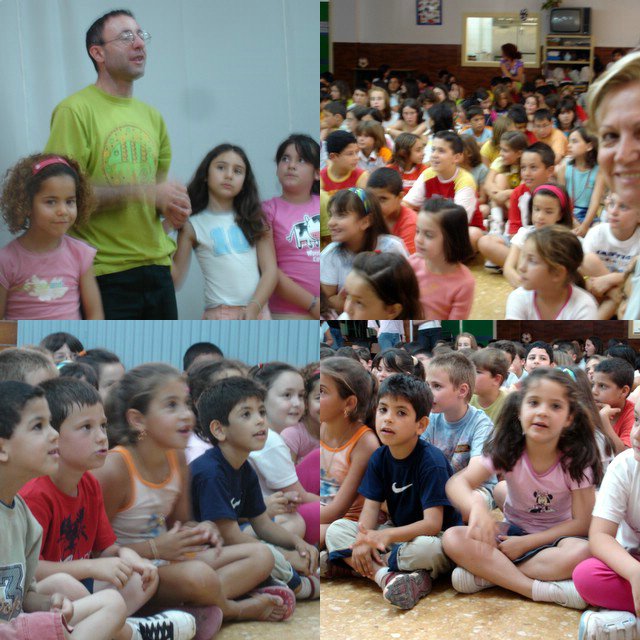
Des d'aquest post voldria obrir una finestra que us permeta conéixer creadors (músics, actors, ballarins, contadors, etc.) que estarien encantats d'anar als vostres centres. Ací trobareu enllaços a les seues produccions creatives, no dubteu a parlar amb ells:
Contacontes valencians (contadors d'ací i d'arreu en totes les llengües)
Valentí Piñot (introducció al teatre i dinamització cultural)
Rodamóns teatre (músiques i cançons de tradició popular)
Jesús Marco (Los colores de la voz. Tallers de música, cant i expressió corporal)
Isabel Carmona (actriu de la Companyia El Micalet Ballant-ballant)
Richard Kobena (música africana)
Rodamóns teatre (músiques i cançons de tradició popular)
Jesús Marco (Los colores de la voz. Tallers de música, cant i expressió corporal)
Isabel Carmona (actriu de la Companyia El Micalet Ballant-ballant)
Richard Kobena (música africana)
divendres, de febrer 03, 2006
Al calor de las palabras
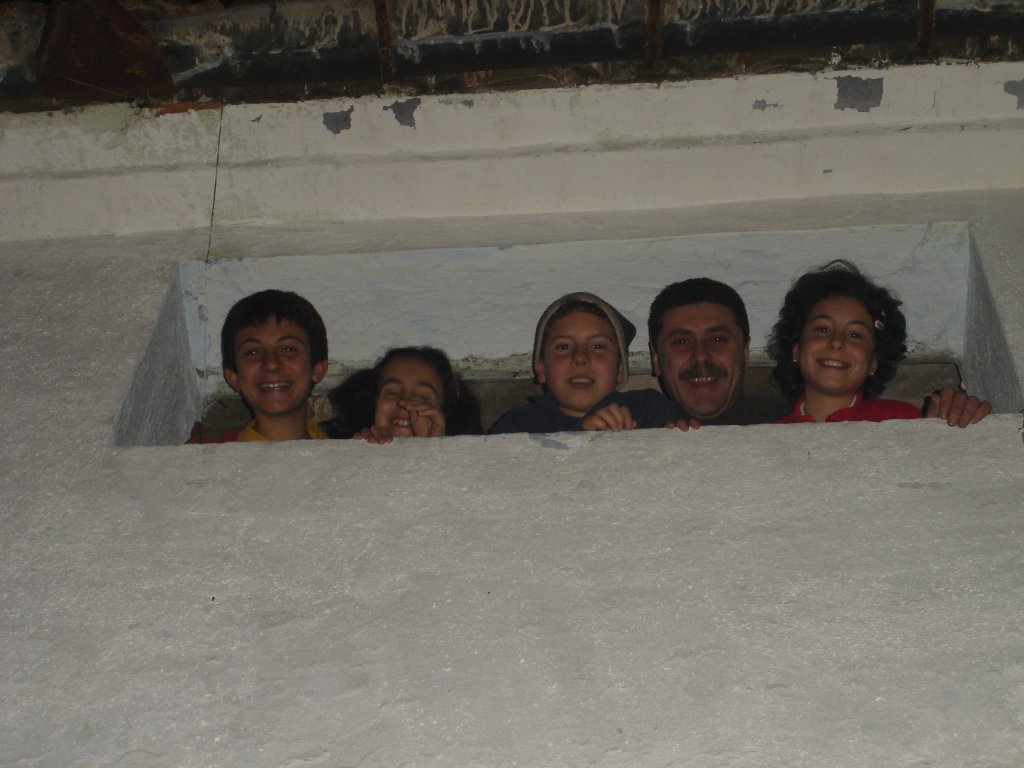
El cap de setmana de Sant Antoni a Xelva celbraren el festival "Cuentantón" que abans es deia "Al calor de la palabras" tota una festa al carrer de foc i de contadors. A no perdre l'any que ve.
OHP
It was our third day going to Sagunto for our English Alive! classes. Everyone was feeling so cold… but then Tim arrived, he told everyone to stand up, and we started with the warming up… nothing similar to what one can be thinking of for an English lesson, but really useful to get in touch with your students!!!
The activity goes as follows: The teacher gets an object (in this case first it was a pen, and then a chair!). The students, and the teacher, stand in a circle. The aim is to find a different use for these objects… a pen can be a toothpick, or a microphone! And a chair can be a formula one car, or an umbrella!
Next, as everyone is standing up, we did an exercise we were already familiar with. This can be useful with students, they can identify what they are going to do and feel more confident. We did some sentence ordering, each one of us was a different word, (the teacher whispers the word to the student) and we had to order the sentence but without saying the word, guessing where our place might be. This was the first contact with miming this lesson…
Continuing with miming, the teacher cuts up a story which they have previously studied in class, in this case we met “Willy the Kid” again. Each student is given a piece of this story and without speaking they have to get the story in order (lining up in chronological order). Once they are in order, the first one will mime the scene he/she has, and the person on his/ her left will tell the story, so that they practice some grammar -for instance, past tenses-.
And finally we sat down! The class continued with putting things together… a poem by D.H. Lawrence was the material, verses had been cut apart by the teacher, now the students had to rearrange them, and more than one order was possible here, so students have to think of the reasons why they put one verse first and the other one next.
We had not used the overhead projector (OHP) yet… it was time for a story, A lot To Learn. So working with the OHP, the story was revealed little by little, and we were guessing what could come next, surprisingly (or maybe not) we guessed practically all of them!).
Think about INFERENCE for a moment: thinking of what will come next.
Next, we jumped to the past, to the Phoenicians, and we had to barter, that is, exchange our goods for something we need, without money. We had a text (in pieces, of course!) and were divided in groups. The teacher gives out, at random, 10 paragraphs to each group. The game consists of bartering with the other groups so as to complete your text, but there are two different texts going around, so one must be careful and only get those the group needs. Here students will practice speaking and listening.
To finish up with the exercises, we did some more miming. Imagine you are in a Hotel reception and you are the customer, but you are dumb. You need to communicate some very important things to the receptionist… you need to mime the actions! Two groups, one representative from each group will mime each sentence. The competition is on!
To end the class we discussed a little how we could apply these techniques with our students, some of us have already tried, and we have been really successful!
And remember, whenever you feel cold… you need to move your whole body, so stand up and jump, run, clap your hands…MOVE!
*Inference (From Wikipedia): Inference is the act or process of drawing a conclusion based solely on what one already knows. Suppose you see rain on your window - you can infer from that, quite trivially, that the sky is grey. Looking out the window would have yielded the same fact, but through a process of perception, not inference.
The activity goes as follows: The teacher gets an object (in this case first it was a pen, and then a chair!). The students, and the teacher, stand in a circle. The aim is to find a different use for these objects… a pen can be a toothpick, or a microphone! And a chair can be a formula one car, or an umbrella!
Next, as everyone is standing up, we did an exercise we were already familiar with. This can be useful with students, they can identify what they are going to do and feel more confident. We did some sentence ordering, each one of us was a different word, (the teacher whispers the word to the student) and we had to order the sentence but without saying the word, guessing where our place might be. This was the first contact with miming this lesson…
Continuing with miming, the teacher cuts up a story which they have previously studied in class, in this case we met “Willy the Kid” again. Each student is given a piece of this story and without speaking they have to get the story in order (lining up in chronological order). Once they are in order, the first one will mime the scene he/she has, and the person on his/ her left will tell the story, so that they practice some grammar -for instance, past tenses-.
And finally we sat down! The class continued with putting things together… a poem by D.H. Lawrence was the material, verses had been cut apart by the teacher, now the students had to rearrange them, and more than one order was possible here, so students have to think of the reasons why they put one verse first and the other one next.
We had not used the overhead projector (OHP) yet… it was time for a story, A lot To Learn. So working with the OHP, the story was revealed little by little, and we were guessing what could come next, surprisingly (or maybe not) we guessed practically all of them!).
Think about INFERENCE for a moment: thinking of what will come next.
Next, we jumped to the past, to the Phoenicians, and we had to barter, that is, exchange our goods for something we need, without money. We had a text (in pieces, of course!) and were divided in groups. The teacher gives out, at random, 10 paragraphs to each group. The game consists of bartering with the other groups so as to complete your text, but there are two different texts going around, so one must be careful and only get those the group needs. Here students will practice speaking and listening.
To finish up with the exercises, we did some more miming. Imagine you are in a Hotel reception and you are the customer, but you are dumb. You need to communicate some very important things to the receptionist… you need to mime the actions! Two groups, one representative from each group will mime each sentence. The competition is on!
To end the class we discussed a little how we could apply these techniques with our students, some of us have already tried, and we have been really successful!
And remember, whenever you feel cold… you need to move your whole body, so stand up and jump, run, clap your hands…MOVE!
*Inference (From Wikipedia): Inference is the act or process of drawing a conclusion based solely on what one already knows. Suppose you see rain on your window - you can infer from that, quite trivially, that the sky is grey. Looking out the window would have yielded the same fact, but through a process of perception, not inference.
dijous, de febrer 02, 2006
EOI Sagunt
Les directrius de la Comunitat Europea ens parlen d'una revolució aplicada a la didàctica de les llengües i determinen el que hauria de ser el MCRE (Marc Comú de Referència Europeu) a partir del qual desenvolupar instruments didàctics per a l'ensenyament-aprenentatge de llengües a tota Europa, focalitzats principalment en la revisió de la metodologia i de l'avaluació.
Model de llengua com a ÚS
• Objectius de 5 DESTRESES • Seleció dels continguts • Criteris d’avaluació
Base pràctica : competències
• Lingüística • Sociolingüística • Pragmàtica
Estratègies: • Planficació •Execució • Control • Reparació · Situacions comunicatives reals
En aquest sentit l'EOI de Sagunt està portant a cap una sèrie de tasques que no se limiten només a complir amb els manaments institucionals sinó que pretén que aquests servisquen com a motiu d'anàlisi i de reflexió. De moment ací teniu algunes de les tasques que s'estant portant a cap:
- Creació de edublocs per a cada departament
Departament d'italià
Departament d'anglés
Model de llengua com a ÚS
• Objectius de 5 DESTRESES • Seleció dels continguts • Criteris d’avaluació
Base pràctica : competències
• Lingüística • Sociolingüística • Pragmàtica
Estratègies: • Planficació •Execució • Control • Reparació · Situacions comunicatives reals
En aquest sentit l'EOI de Sagunt està portant a cap una sèrie de tasques que no se limiten només a complir amb els manaments institucionals sinó que pretén que aquests servisquen com a motiu d'anàlisi i de reflexió. De moment ací teniu algunes de les tasques que s'estant portant a cap:
- Creació de edublocs per a cada departament
Departament d'italià
Departament d'anglés
Subscriure's a:
Missatges (Atom)