Hi there! ^^
Whatever we were expecting, it is always a great fun to find out that boring grammar exercises can turn into really funny experiences. Yesterday, for instance, we kept practising with role-plays and how to make oral lessons seem (no pun intended), less foreign. We all took active part in these activities, and it was a real pleasure because we did what students love: we took things apart.
Some basic activities in grammar tend to present our poor, low base students with exercises worth a Sergeant's drill: "Unscramble these words! Ar! Soldier! That gap isn't meant to be filled that way! No speaking! Detention!" No reasoning and no fun. What about trying these exercises, for a change?
1- Spelling activity: Instead of boring, old fashioned 'I spell, you copy', make them write down the name of a place they know about. It can be somewhere with a funny or exotic name (Has anyone ever heard of places such as Hokkaido, Brno, Vladivostok or Peralejos de las Truchas? O.o?) They have to use vowels and consonants that are difficult or easily mistaken: g, j, a, i, e… The students get to practise without feeling restricted or ashamed of their pronunciation, because they can do this in pairs, and they get to brag about how many weird names they know! (We certainly did :P)
2- Dynamic grammar: Take a number of students and an organisator. The teacher whispers a word to each of the students. The organisator has to build up the sentence by physically moving the students and putting them into place. Contact with the students, such as making them tell the word by touching their forehead or move them around by their hands, is strongly encouraged. It makes the activity more fun!
3- Dynamic grammar 2: Once a sentence is build up, you can ask the students to link themselves according to the structure of the sentence: words belonging to the 1st part of a conditional together… Welcome to the words conga!
4- Cutting up the language: We get creative in this one, so we require a bit of material. Scan a page of a cartoon. (Lucky! We got to do this with Willy the Kid! Westerns rule! ^^). Then cut it up by separating each picture from the text. You give the students a real mess of images and sentences, according to the difficulty level they can manage, and they have to 1st join each pic with the right text, and then put the sequences in the right order. Then, you can make them change the ending, or make their own comic strip! This way you don't ask those boring questions about 'what is the character going?' that both the student and the teacher already know :P (Nice one, Tim!!)
5- Picture dictation: The teacher gets to describe a picture that the students can't see. They have to draw it, to the best of their abilities. A piece of advice: keep them! You don't know if the next Picasso is in your class!! :D You can adapt this activity to what you want them to practise: prepositions of place, for instance. And impossible pictures are funnier to draw (who can draw a cow on a roof?), as well as pictures they can recognise, funny ones, nonsense ones…
6- Picture dictation 2: One describes an image from a magazine or similar to a partner. Again, the artist mustn't see it! This sort of activities get better and better the more you practise, and language gets better as well: more precise descriptions, richer details, pointing out the differences…
7- Nice drama warm-up activity: Looking at a picture, you try to enact it mime or mannequin style by telling to somebody how you would like them to stand: 'put your hand up, bend your left wrist a little…' This can be practised by groups of two or small groups and it can be done without talking at all to correct the mistakes! It's funny as well if you get somebody to take a photo of the final result, and you compare it with the original (right, Toni?) ;)
8- Text competitive activity: Working with a story, you show it little by little, line by line. Each team has to guess which words is going to be the first one next line. The get a point if they guess the category, two points if the word is really similar and three is the get the right, exact word! You can look back at the text for references, and it includes all kind of grammar revisions. It adapts to all levels as well! And you get to show your mean, competitive streak *grin*
9- Role-play for small groups: Each of the four members get a slip of paper with detailed information on their character. They have to play their role accurately, and try to get the other characters to get along with him/her. In this game, there was a psycho, a detective, a delusional woman and a doctor. Each one has a conflictive role: one wants to drink, another one cannot allow that… The real reason must never be known! Quite a tough activity in which you get to show your performance ability, and all students can see how a little drama suddenly has a life of its own.
And this is all we did. As you can see, great fun! I guess you're all regretting not enrolling to this course!
Rosa.
diumenge, de gener 29, 2006


dissabte, de gener 28, 2006
Usos del retroprojector
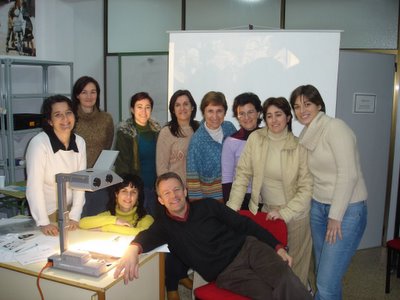
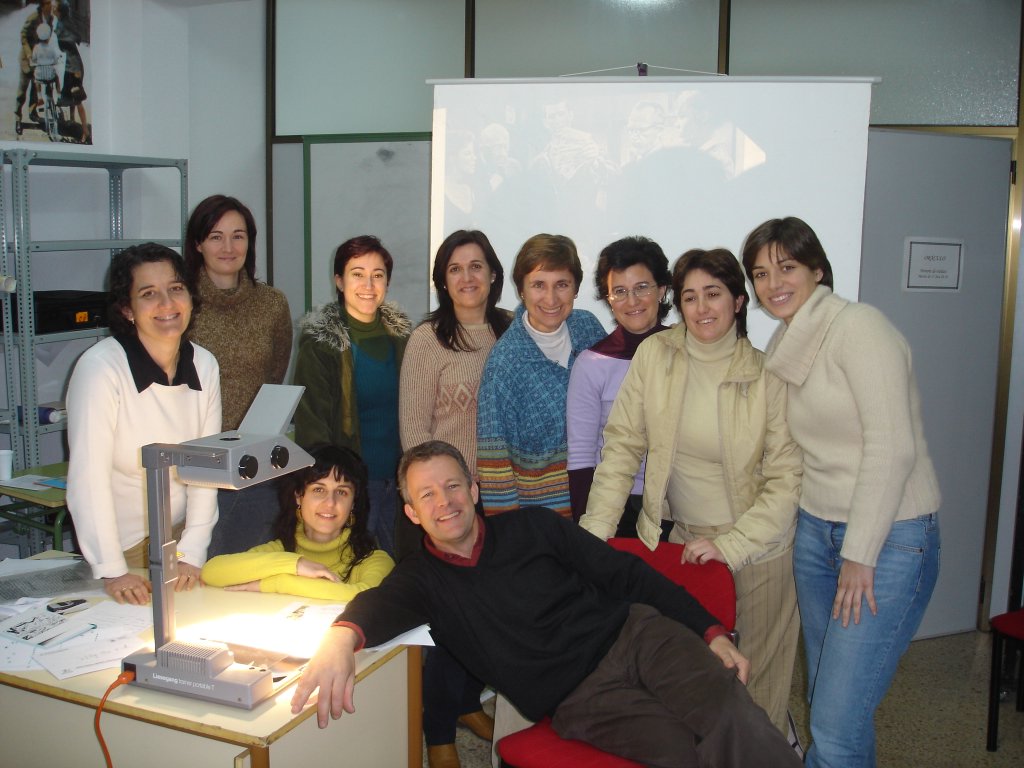
A l'espera de rebre el resum de la sessió de Tim plantegem el debat de l'ús del retroprojector al taller de llengües. Aquells que heu tingut l'experiència sabreu que evidentment no és per donar llum als personatges de la foto sinó per a desenvolupar algunes de les microhabilitats de l'expressió oral, com per exemple: inferir, anticipar, improvisar, argumentar, descriure, generar idees per a un tema, sintetitzar, comparar, etc.
Esperem les vostres propostes

Esperem les vostres propostes
dimecres, de gener 25, 2006
Metàfores educatives i ensenyament de llengües
En el curs English Alive Tim no para de proposar metàfores educatives referides a l'ensenyament de llengües afortunadíssimes, i a mi se m'acudeix la de "la construcció de la casa". Els tradicionalistes, per una banda dirien que no es pot construir una casa sinó tenim primer l'estructura i les rajoles. Per l'altra, els coginitivistes dirien que cadascú comença a construir-se la casa com vol i pot, per ex. com fan els nius els ocells afigint trosset a trosset.
En definitiva podríem concloure que l'adquisició d'estructures lingüístiques hauria d'anar en paral·lel amb el desenvolupament de les destreses comunicatives... perquè si no cal tornar a començar sempre des del principi. Quantes vegades heu repetit el mateix llibre d'anglés?
En aquest post us invite a que comenteu les metàfores de Tim Herdon des del vostre punt de vista: pujar en bicicleta (és una destresa o un coneixement)... i si algú vol comentar la d'avui?
Mentre que ho feu i ens doneu temps a posar les conclusions la sessió i la foto, ací va una altra metàfora en forma d'eslogan publicitari:
"We don't teach you anything
We develop what's alredy inside you"
Què t'ha paregut!!!
En definitiva podríem concloure que l'adquisició d'estructures lingüístiques hauria d'anar en paral·lel amb el desenvolupament de les destreses comunicatives... perquè si no cal tornar a començar sempre des del principi. Quantes vegades heu repetit el mateix llibre d'anglés?
En aquest post us invite a que comenteu les metàfores de Tim Herdon des del vostre punt de vista: pujar en bicicleta (és una destresa o un coneixement)... i si algú vol comentar la d'avui?
Mentre que ho feu i ens doneu temps a posar les conclusions la sessió i la foto, ací va una altra metàfora en forma d'eslogan publicitari:
"We don't teach you anything
We develop what's alredy inside you"
Què t'ha paregut!!!
dissabte, de gener 21, 2006
Grafittis
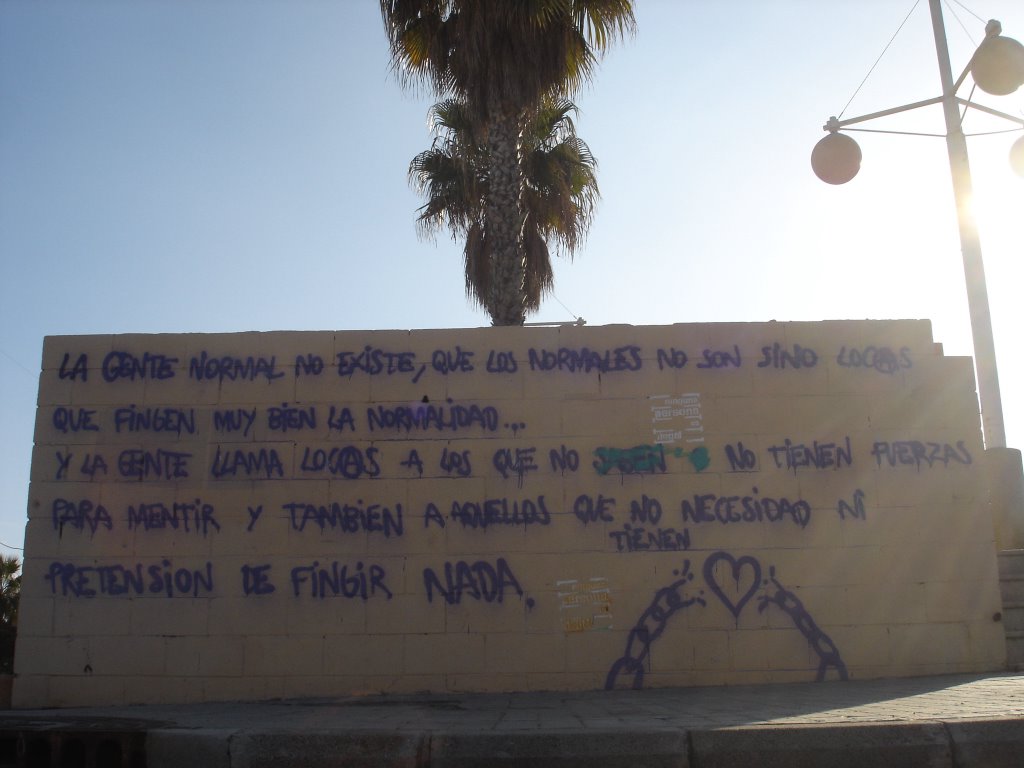 El Cabanyal...
Fa temps que vull proposar una activitat sobre els grafitti com a expressió revelada del que passa a les ciutats i no tothom s'atreveix a manifestar.
Recentment he trobat una pàgina sobre fotosofia que m'ha donat la idea. Es tracta d'aplicar els principis d'anàlisi i observació d'imatges no sols a l'art dels museus sinó als esdeveniments artístics que succeeixen al carrer que encara que són moltes vegades anònims tenen la força de voler transformar alguna cosa a partir del pensament.
Aquest seria un principi per a la meua amiga Isabel Cruz que fa de guia a l'exposició sobre Keith Haring que hi ha a la Universitat de la Nau. No us la podeu perdre. Ella fa de guia un dissabte/diumenge sí, un altre no a partir de hui dia 21/22 gener.
NOTA: Si voleu enviar-nos grafittis de la nostra ciutat els divulgarem encantats i si voleu treballar amb els vostres xiquets l'art del grafitti entreu ací
dijous, de gener 19, 2006
English alive 1
Tim Herdon Sagunt, Tuesday 17th January 2006
If you like communication, practising English and education this is the perfect course for you. I felt so happy before, during and after going to the Cefire that afternoon because it’s as if we were abroad in a summer course learning and having good time.
In order to introduce ourselves Tim proposed some short, funny activities:
- Say a few sentences about our lives.
- Stand in a line following the alphabetic order of our names: Antoni, Àngels, Anna, Isabel, Nydia, Marta A, Marta G, Pilar, Rosa and Tim.
- We have to stand considering whether we live near or far from the centre of Valencia.
- The same activity but following the order of our birthday’s month.
After that warm up Tim started a short but interesting reflection about language learning and he asked us if we consider that that involves learning knowledge or learning skills or the two of them and we all chose the last option.
Good communication involves:
-Using linguistic systems: phonology, grammar, vocabulary.
- Showing awareness of function.
- Showing awareness of social and cultural rules.
- Using communication strategies.
And we checked all that with a practical example, asking for a beer in an English pub. Tim explained that teaching in a communicative way is like learning cycling. So we all jumped into the pool without any planning and we started doing the role play with different situations Tim proposed working in pairs. We realize that we get humour, fun, confidence, the use of all the skills doing that and they allow the students to show their own personality or try to be another different one if they want.
A good communication activity needs some conflict. Otherwise there is calm, peace, like Japanese people that are not so talkative as we are. So Tim has made us work in two teams and choose a representative who sits down in a chair facing the other and behind the representative the rest of the group giving ideas. This situation was as if we’re in a clothes shop and a customer wants to return a jumper because it has one sleeve longer than the other and the seller can’t do that because the manager is out at that moment. We change three times each representative and find lots of fun and use different resources.
The last activity was very interesting too. We worked together in threes, we had a letter to Holmes asking for help in a strange case. We were in three teams and each one worked on a different letter and then we changed groups and mixed them. The new group knows the contents of the three letters and it is like a jigsaw, so we find the solution to the case.
To finish the first session we wrote a letter to Tim setting out our expectations for this course and we exchanged our e-mail addresses.
By Pilar Puerto
dimecres, de gener 18, 2006
Festes parateatrals
Xavier Fàbregas Cavallers, dracs i dimonis
A tot el llarg de la nostra geografia cultural s'han conservat una diversitat de festes populars amb un contingut molt estructurat com a ritual teatral són el que es coneixen com a manifestacions parateatrals i que són molt interessants per anilitzar les nostres caracerístiques com a poble. No es perdau el llibre deFàbregas, però sobretot no deixeu d'anar a alguna d'aquestes festes que encara tindran lloc el proper cap de setmana a Massalfassar, Canals, Vilanova d'Alcoleja, Xelva, etc.
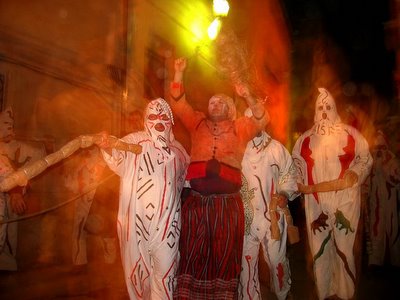 Els botargues del Forcall
* La foto l'ha enviada Pilar Puerto que com veieu ha fet els deures del curs English alive.
Hello everybody,
As you can see I'm quite efficient and i'm doing my homework before going to bed.
I send you the list of addresses and a picture from the special festivity I went last Friday night in Forcall (Castellón), they celebrate S. Anton with a big fire you can pass through and remain inside a few seconds with the evils, it's a experience I recommend you.
Next day we can take a photo of our group in alphabetic order to illustrate the activity we've done to start the session.
See you soon. Best wishes.
A tot el llarg de la nostra geografia cultural s'han conservat una diversitat de festes populars amb un contingut molt estructurat com a ritual teatral són el que es coneixen com a manifestacions parateatrals i que són molt interessants per anilitzar les nostres caracerístiques com a poble. No es perdau el llibre deFàbregas, però sobretot no deixeu d'anar a alguna d'aquestes festes que encara tindran lloc el proper cap de setmana a Massalfassar, Canals, Vilanova d'Alcoleja, Xelva, etc.
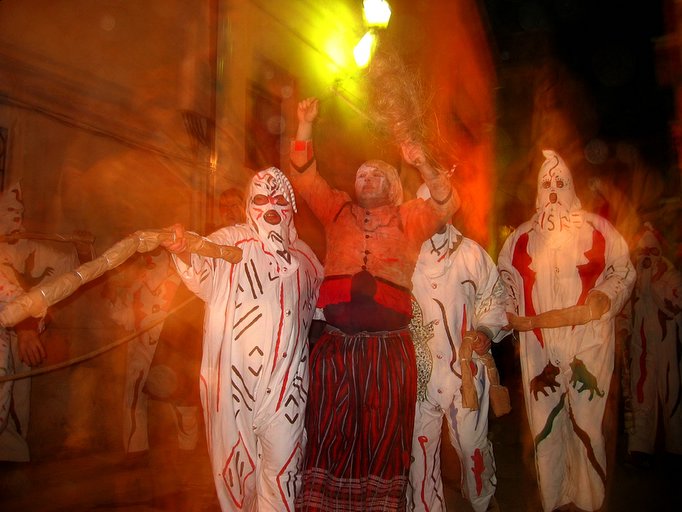 Els botargues del Forcall
* La foto l'ha enviada Pilar Puerto que com veieu ha fet els deures del curs English alive.
Hello everybody,
As you can see I'm quite efficient and i'm doing my homework before going to bed.
I send you the list of addresses and a picture from the special festivity I went last Friday night in Forcall (Castellón), they celebrate S. Anton with a big fire you can pass through and remain inside a few seconds with the evils, it's a experience I recommend you.
Next day we can take a photo of our group in alphabetic order to illustrate the activity we've done to start the session.
See you soon. Best wishes.
dilluns, de gener 16, 2006
La poesia per la dansa
"La poesia és a la dansa el que la novel·la és al teatre"
Fa anys que utilitze aquest "axioma" per referir-me a la capacitat de la dansa per expressar les sensacions i emocions que ens produeix la poesia. Sovint ens trobem amb que no sabem argumetar racionalment per què, com i quant ens agraden uns versos, però als tallers de literatura -amb tècniques dramàtiques- hem aprés que aquestes experiències poètiques es poden explicar per mitjà del moviment i la gestualitat. De la mateixa manera hem utilitzat el teatre en tant que eina experièncial, vivencial i col·laborativa per despertar el desig de literatura en els nostres alumnes.
Ara bé, algú ens podria objectar que una cosa és l'argumentació teòrica sobre la relació entre els diferents llenguatges expressius i altra una expemplificació pràctica reixida. Per això no volem deixar passar l'oportunitat d'invitar-vos a veure Soñando Alicia de la Companyia Ananda Dansa al Rialto de València. Per saber més...
Fa anys que utilitze aquest "axioma" per referir-me a la capacitat de la dansa per expressar les sensacions i emocions que ens produeix la poesia. Sovint ens trobem amb que no sabem argumetar racionalment per què, com i quant ens agraden uns versos, però als tallers de literatura -amb tècniques dramàtiques- hem aprés que aquestes experiències poètiques es poden explicar per mitjà del moviment i la gestualitat. De la mateixa manera hem utilitzat el teatre en tant que eina experièncial, vivencial i col·laborativa per despertar el desig de literatura en els nostres alumnes.
Ara bé, algú ens podria objectar que una cosa és l'argumentació teòrica sobre la relació entre els diferents llenguatges expressius i altra una expemplificació pràctica reixida. Per això no volem deixar passar l'oportunitat d'invitar-vos a veure Soñando Alicia de la Companyia Ananda Dansa al Rialto de València. Per saber més...
divendres, de gener 13, 2006
Els mites contats
La mitologia grega és el millor resum de les qualitats i maneres de ser de la humanitat fins als nostres dies. Els homes i les dones sempre han projectat en les seves divinitats les pròpies virtuts i vicis. La psicologia de fet s'ha inspirat en els mites clàssics per referir-se a moltes de les patologies. Arnau Vilardebó contarà alguns mites del seu espectacle Naixen déus el proper dimecres al Café del Duende.
dimecres, de gener 11, 2006
Taller de dramatització 06
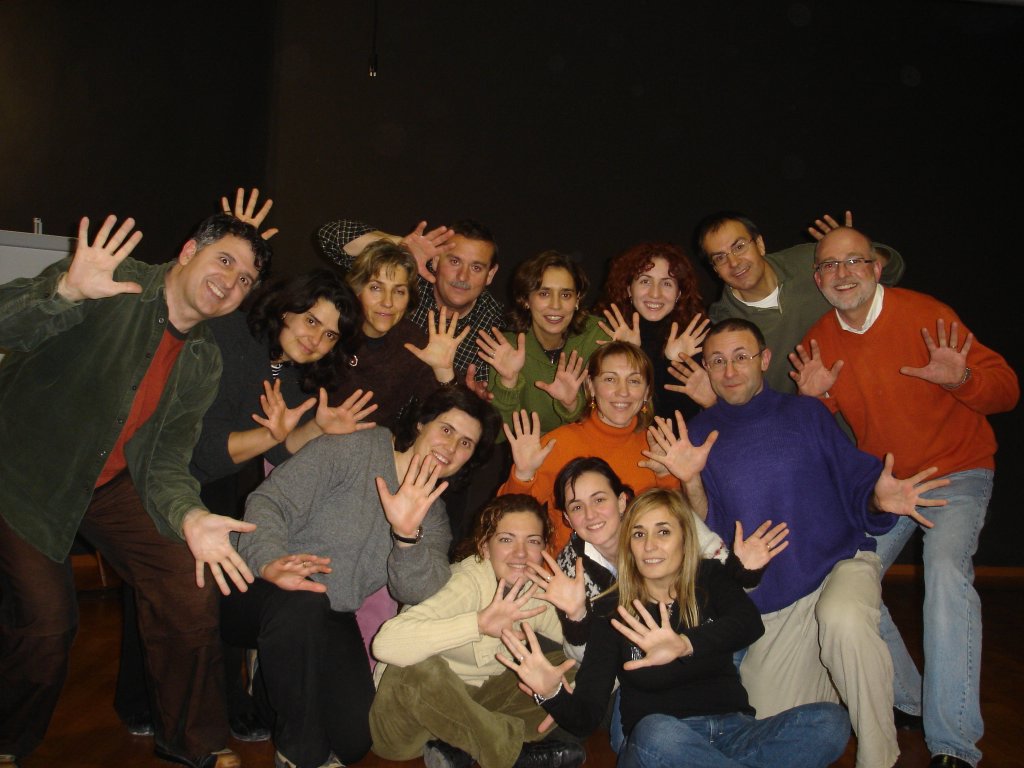
Amb unes forces renovades inciem el taller de didàctica de la dramatització 06. I volem començar amb una pregunta: Quin tipus de profe de dramatització sóc? De segur que alguna vegada t'hauràs preguntat quin tipus de profe ets? Perfecte, aquest és un principi d'autocrítica que pot encetar el camí per al desig de recerca contínua que pensem ha de caracteritzar al professorat. Tot seguit us presentem algunes de les possibilitats d'estils educatius referits als de dramatització que pot ser extrapolable a qualsevol altra matèria. Localitza en el test les que t'identifiquen i les que rebutjaries plenament. Les altres són noves possibilitats a investigar.
diumenge, de gener 08, 2006
Repte als profes d'anglés
 DIDÀCTICA DE L’ANGLÉS: English alive. Dimarts a les 17.30 a la seu del CEFIRE de Sagunt, a partir del 17/01/06. Amb Tim Herdon.
How do we get students to see English as a living language used all over the world, and not just another school subject, imprisoned in a textbook? By getting them to use it as a tool of communication. This refresher course for teachers of English will explore different ways of providing students with opportunities to practise and improve their oral English, in situations that they find stimulating and motivating. We will work on a range of different activities such as role plays, drama activities, simulations and games. All the activities are transferable to different teaching situations and part of the course will focus on teachers designing their own tasks for speaking activities. The workshops will be highly practical in character and so participants will have the opportunity to extend their own speaking skills.
¿Cómo lograr que los alumnos vean el inglés como idioma vivo utilizado en todo el mundo, y no solo como una asignatura más, encarcelada en un libro de texto? Haciendo que lo utilicen como herramienta de comunicación. En este curso de reciclaje para profesores de inglés se investigarán diferentes maneras de proporcionar a los alumnos oportunidades para practicar y mejorar su inglés oral, en situaciones que les resulten estimulantes y motivadoras. Trabajaremos una gama de actividades diferentes como los “roleplays”, las actividades dramáticas, las simulaciones y los juegos. Todas las actividades propuestas son transferibles a diferentes situaciones educativas y una parte del curso enfocará el diseño propio de actividades para la práctica oral por parte de los profesores. Los talleres serán de carácter muy práctico, así los participantes tendrán la posibilidad de ampliar sus propias habilidades orales.
Taller de dramatització
 LA DRAMATITZACIÓ COM A EINA DIDÀCTICA. Recursos per a una pedagogia activa. Amb Antoni Navarro, Rafael Desco, Josep Lluís Gràcia i Jesús Marco.
El taller de dramatització que el CEFIRE de Sagunt organitza cada any començarà el proper dimecres dia 11 a les 17.30 h. al Saló d’Actes de la Casa de Jove
.jpg) ntut. Seu de la Biblioteca Pública de L´Eliana.
ntut. Seu de la Biblioteca Pública de L´Eliana. .jpg)
Subscriure's a:
Missatges (Atom)